In Indian Harbour Beach, the 4-Point Inspection Passes. The Dock Is What Stops the Closing.
August 27, 2026
August 27, 2026
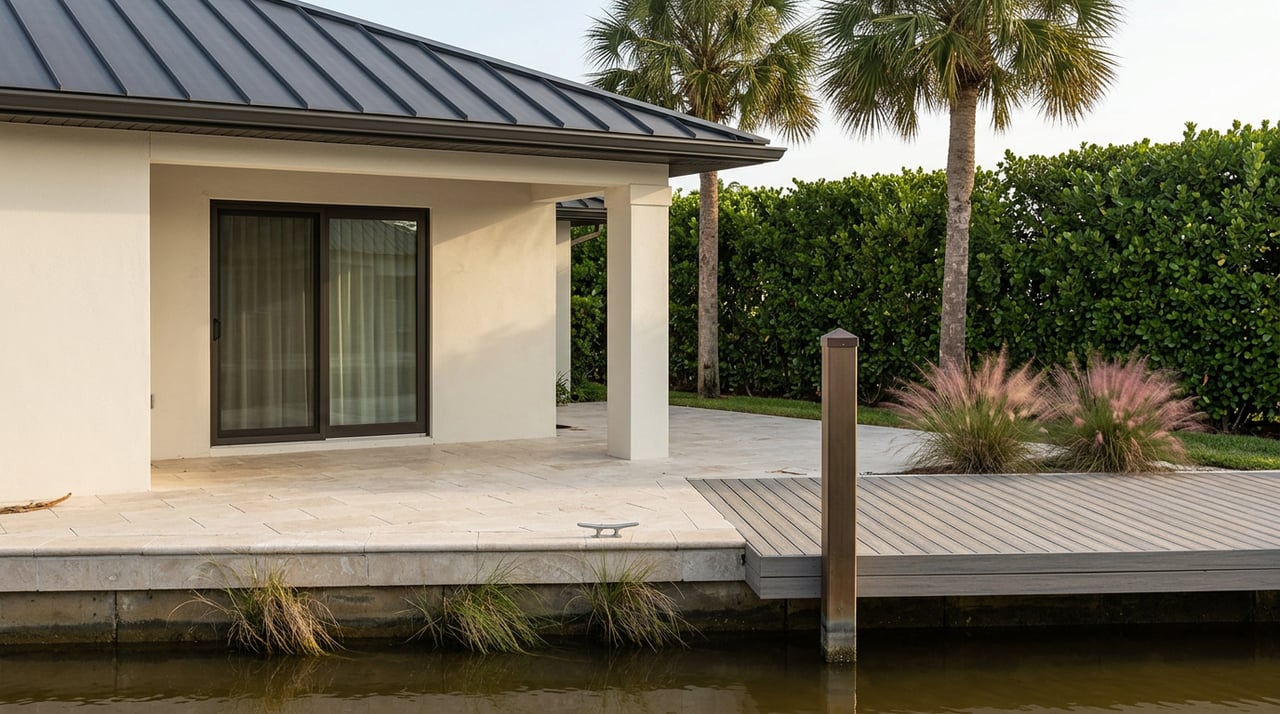
A seller on the Grand Canal does everything right. New roof, updated panel, fresh HVAC, a kitchen gutted down to the studs. The 4-point inspection comes back clean. The insurance quote lands where everyone hoped. Then the buyer's title company runs its own search and finds a boat lift installed a decade ago with no county sign-off, and a seawall repair that was never closed out after a storm. The house was never the problem. The water side of the lot was.
That gap is not a coincidence. It is built into how Florida insures homes and how Florida insures title, and on a barrier island where nearly every desirable lot touches a canal, the Banana River, or the Grand Canal itself, it is the single biggest thing sellers underestimate.
Florida's insurance-driven inspection regime is narrow by design. A 4-point inspection exists to give a carrier confidence in exactly four systems: roof, electrical, plumbing, and HVAC. That is the whole scope. It tells an underwriter how much useful life is left in the house's core systems, and it is the document most carriers want before they will write or renew a policy.
It says nothing about a dock. It says nothing about a seawall. It says nothing about a boat lift bolted to a piling that was never inspected by the county that issued the permit in the first place. A home can sail through underwriting with a spotless 4-point report while carrying real, unresolved exposure on the water side of the property, and nobody involved in the insurance process would ever know it.
If the insurance side of the transaction ignores marine structures, the title side actively excludes them. Title insurance is built to protect ownership and boundaries, not to certify that every improvement on the lot was properly permitted. Unpermitted docks, seawalls, and similar structures sit outside what a standard owner's policy will cover, which means if the county later requires removal or correction, the buyer has no title claim to fall back on.
That is a meaningful distinction for anyone selling on the water in Indian Harbour Beach, where the premium is the water. A dry-lot buyer in Harbour Lights or Martesia never has to think about this. A buyer closing on a Grand Canal address absolutely does, because the thing they are paying the premium for is exactly the thing title insurance will not backstop if it was never permitted correctly.
| What insurance checks (4-point) | What title and buyers check separately |
|---|---|
| Roof condition and age | County permit history for the dock, lift, and seawall |
| Electrical panel and wiring | State and federal authorization on file for shoreline work |
| Plumbing type and age | Whether the seawall sits on private land or state submerged land |
| HVAC age and condition | Maintenance and repair records tied to those permits |
Brevard County issues its own Residential Marine Construction permits for the installation or replacement of docks, seawalls, and boat lifts in the canals, drainage easements, and rights-of-way that make up so much of Indian Harbour Beach's waterfront. Applications move through the county's Advanced Service Site, and every one requires review by county staff before work can begin.
That county sign-off is often not the only one required. The Florida Department of Environmental Protection regulates shoreline stabilization and dock construction across the state through a tiered system: some small, low-impact projects qualify for an exemption, moderate projects fall under a general permit, and larger or more complex work needs a standard individual permit, which involves a full environmental review and can take considerably longer to clear. Work that touches navigable water or affects wetlands can also draw in the U.S. Army Corps of Engineers. None of these agencies substitute for the others. A dock or seawall on the Grand Canal can need county approval, state approval, and federal approval all at once, and a seller who assumes the original contractor handled all three is often wrong.
This is not an abstract risk spread evenly across the city. It concentrates precisely where the water premium is highest. Waterfront single-family homes on the Grand Canal run from the mid $400,000s up toward $2 million, and Intracoastal or Banana River homes, many of them inside the guarded, drawbridge-access community of Lansing Island, start around $1 million and reach as high as $3 million. Harbour Lights sits directly across the Grand Canal from Lansing Island, a smaller gated enclave of roughly 90 homes built between the mid-1990s and early 2000s, where the waterfront-facing lots carry a real premium over the interior ones. Windward Cove, in the Kiwi Racquet and Fitness Club neighborhood, and Tortoise Island, sitting on the wide, deep stretch of Grand Canal where two waterways merge, both trade heavily on private dock access and boat lifts as part of the listing story.
Every one of those addresses is selling water access as the core of the value proposition. Every one of them also carries the exact exposure described above, because the dock and seawall are what make the price work, and they are also the piece of the property that neither insurance nor title will fully vet on the seller's behalf.
The pricing data backs this up. Through mid-June 2026, the median sold price across Indian Harbour Beach sat at $484,250 against a median list price of $527,450, with homes taking a median of 43 days to sell. By August 2026, the citywide median home price was reported at $499,900, while the average sale price ran meaningfully higher at $614,230, a gap that widens specifically because waterfront transactions on the Grand Canal and Lansing Island pull the average up well past the median. Current waterfront listings alone number around 14 homes, at a median list price near $487,000 and an average of roughly 64 days on market, both longer and thinner than the broader city figures. A market that thin cannot absorb a surprise mid-escrow. When a permit issue surfaces during a buyer's due diligence on one of these homes, there are not five other qualified buyers waiting to step in.
Florida's standard purchase contract does not leave this to negotiation. It requires the seller to close out any open or expired permits at their own expense before closing. That obligation exists whether or not the seller ever knew a permit was open, and it exists whether the missing paperwork is on the house or on the dock.
There is one narrow relief valve. Florida Statute 553.79 allows a seller to close out a building permit that is six years old or older, without a final inspection, as long as there is no safety hazard present. A permit that expired more recently, where the underlying work was substantially completed, can sometimes be closed without reapplying from scratch, but that determination sits with the local enforcement agency, not with the seller or their agent. Neither path is fast, and neither is something to discover for the first time after a buyer is already under contract.
The fix is sequencing, not paperwork you have never seen before. Before a Grand Canal or Lansing Island listing goes live, pull the permit history for the dock, seawall, and any lift directly from the county's records rather than relying on memory or the prior owner's file. Commission an independent marine-structure inspection that is separate from the general home inspection and separate from the 4-point, because none of those exist to evaluate pilings, decking, or a seawall cap. Gather every permit, repair receipt, and maintenance record into one file a buyer's team can review quickly rather than piece together on their own. And if anything is open, expired, or missing, start the closeout process, including a look at whether Statute 553.79 applies, before the first showing rather than during the inspection period.
None of this changes what the water is worth in Indian Harbour Beach. It changes who controls the timeline when the question comes up, and on the Grand Canal, that question always comes up.
If my 4-point inspection already passed, do I still need a separate dock or seawall inspection before listing? Yes. The 4-point only evaluates roof, electrical, plumbing, and HVAC. It has no bearing on whether your dock, lift, or seawall was ever permitted, so a clean 4-point report tells a buyer nothing about your marine structures.
Will title insurance protect my buyer if the dock turns out to be unpermitted? No. Unpermitted docks and seawalls fall outside what a standard owner's title policy covers, which is exactly why buyers and their lenders push to verify permit status before closing rather than relying on the title commitment to catch it.
Can I just leave an old, undocumented permit alone and let the buyer deal with it? The standard Florida contract puts the burden on the seller to resolve open or expired permits before closing, at the seller's expense. Leaving it for the buyer to discover typically costs time and leverage, not just money.
Does a permit closed out under Statute 553.79 mean the structure is fully compliant going forward? It resolves the open permit itself, assuming no safety hazard is found, but it does not exempt future work on that structure from needing its own new permits through the county, FDEP, or the Army Corps as applicable.
If you are weighing a sale on the Grand Canal, Lansing Island, or anywhere else along Indian Harbour Beach's waterfront, the permit history on your dock and seawall deserves the same early attention as your listing photos. Jamie Dandridge works this stretch of the Space Coast every week and can walk you through what your specific address needs before a buyer's team finds it first. Request a home valuation to start that conversation.
Stay up to date on the latest real estate trends.
Trust him for distinguished real estate service along Melbourne Beach’s coast. With his luxury-market expertise, local insight, and dedicated support, he ensures your buying or selling journey is seamless and successful.