In Suntree, Every Closing Has Two HOAs and Only One of Them Waits
September 3, 2026
September 3, 2026
Ten days before closing, a Suntree seller gets a call from the title company. The Villas of Suntree estoppel came back clean, no violations, dues paid through the month. Good news, except the title company is still waiting on a second one, because the seller's address also falls under the Suntree Master Homeowners Association, and nobody had requested that certificate yet. The closing doesn't move until both letters are in hand. Nine business days later, it does, but only because the closing date had enough slack built in to absorb the miss.
That scene repeats often enough in Suntree to be worth writing down, because almost nobody outside a title office explains it. Most guides to Florida HOA estoppels describe one association, one certificate, one clock. Suntree runs two.
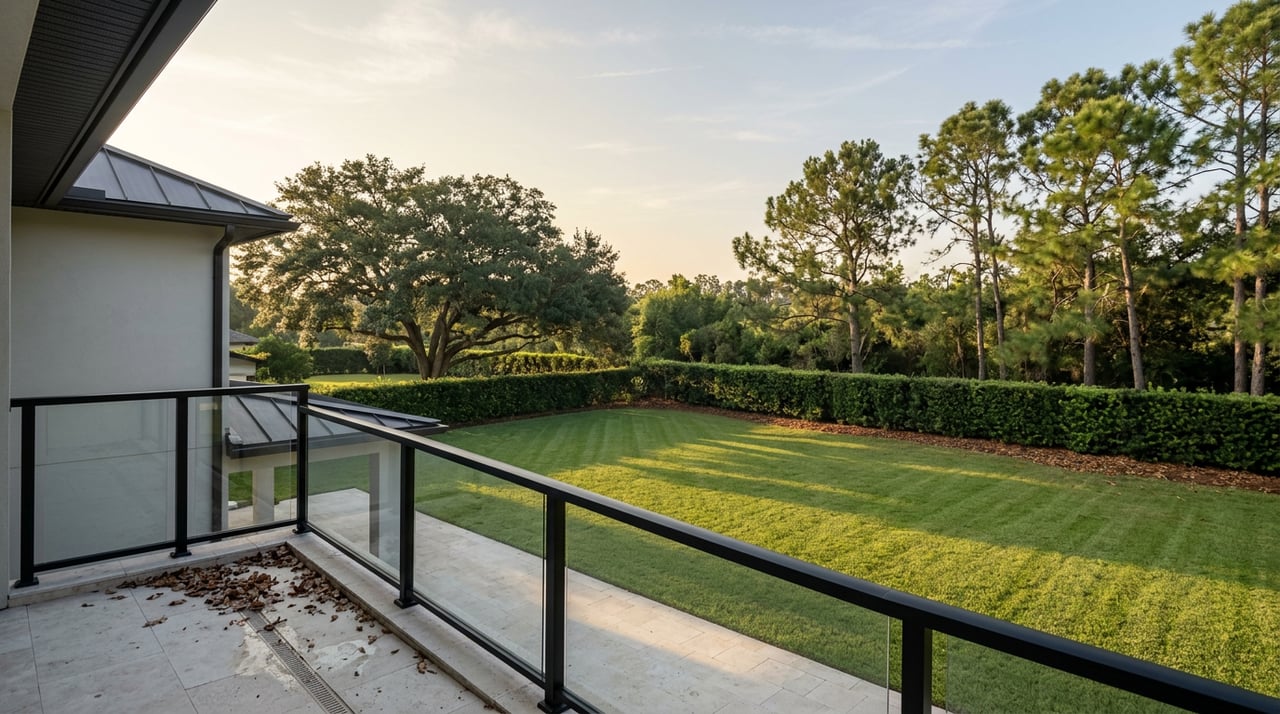
Suntree is not a single homeowners association with a name and a gate. It is a Planned Unit Development that currently spans 4,506 units, organized under the Suntree Master Homeowners Association, known locally as SMHA, with 44 sub-associations sitting underneath it. A home might carry membership in Suntree Bay, Suntree Woods, Villas of Suntree, Foxhall at Suntree, or Courtyards of Suntree at the neighborhood level, and in SMHA at the master level, simultaneously. The sub-association handles the things a resident notices day to day, architectural review, neighborhood-specific assessments, sometimes a private lake or a scrub-jay conservation buffer, as Suntree Bay's own community describes its bordering preserve. SMHA handles common-area covenant enforcement across the entire PUD and bills its own dues separately from whatever the sub-association charges.
Both memberships are mandatory. Both produce their own estoppel certificate when a home sells. Neither one substitutes for the other.
Florida law treats every one of these associations the same way under the statute, whether it's a 40-home sub-association or the master umbrella covering thousands of units. Under Florida Statute 720.30851, an HOA has 10 business days from a written request to deliver a statutory estoppel certificate. The certificate is good for 30 days if delivered electronically or by hand, 35 days if mailed. Miss the window on either end and the numbers can go stale before closing, or the association loses its right to collect what it failed to disclose in time.
The complication in Suntree isn't that the law is unusual. It's that the same 10-day clock runs twice, once for the sub-association and once for SMHA, and they start on whatever day someone actually requests each one. If a title company orders the sub-association estoppel on day one but doesn't think to request SMHA's until the sub-association letter comes back, that's a second 10-business-day window stacked on top of the first, easily eating two to three weeks nobody budgeted for.
| Layer | Governs | Response window | Fee cap | Validity once issued |
|---|---|---|---|---|
| Sub-association (Suntree Bay, Foxhall, Villas of Suntree, etc.) | Fla. Stat. §720.30851 | 10 business days | $299 base, +$119 rush, +$179 if delinquent | 30 days electronic / 35 days mail |
| Suntree Master HOA (SMHA) | Fla. Stat. §720.30851 | 10 business days | $299 base, +$119 rush, +$179 if delinquent | 30 days electronic / 35 days mail |
Same statute, same caps, two separate documents, two separate requests, two separate mailing addresses to track down. Ordering both on the same day, rather than waiting for one to clear before starting the other, is the single move that keeps a Suntree closing on the timeline everyone signed for.
The statutory caps are meant to protect buyers and sellers from being overcharged for a document that used to cost whatever an association felt like charging. On a single account, the cap tops out at $299 if everything is current, or as much as $597 if the account is both delinquent and needs to be rushed. In Suntree, that ceiling applies separately to each association, not once for the whole closing. A seller current on both accounts still owes $598 in combined base fees before either association's delinquent or rush surcharge enters the conversation. A seller behind on dues at the sub-association level, current at the master level, pays the delinquent surcharge on one certificate and the base fee on the other.
None of this shows up on a listing sheet. It shows up on the seller's net proceeds statement two days before closing, which is a bad time to discover it.
Homes on or near the golf course carry a third layer that isn't governed by the estoppel statute at all. Suntree Country Club is a private club, separate from both SMHA and any sub-association, and membership doesn't transfer with the deed. The club's own materials describe a member-owned, member-only club, and joining requires a separate application through the club's membership office, not through the closing table. Pedways connect several Suntree neighborhoods directly to the clubhouse, which tells you how tightly the community and the club are woven together socially, but socially isn't legally. A buyer who assumes a golf-lot address comes with course access is assuming something the HOA estoppel will never confirm and the club will never grant automatically.
There was a real chance in 2026 that Florida would loosen this structure. House Bill 657, filed by state Rep. Juan Porras, who blasted HOAs as a "failed experiment," would have let homeowners petition to dissolve an association entirely, with a path requiring signatures from at least half the voting members and a two-thirds vote to approve termination. It passed the Florida House by a lopsided 108 to 2 on March 5, 2026. It never got a hearing in the Senate Rules Committee and died there on March 13, 2026, when the regular session adjourned.
That means the dual-layer structure that governs Suntree closings today isn't a temporary quirk waiting on legislative relief. It's the framework sellers and buyers are working within for the foreseeable future, and planning a closing around the hope that it simplifies is planning around something that already failed to happen once this year.
Suntree listings have been moving with active inventory in the neighborhood of 130 homes as of late August 2026 and days-on-market averages in the range of two months. That gap between a 70-day average time on market and a 30 to 35-day estoppel validity window is the part sellers underestimate. An estoppel ordered the day a listing goes live is worthless by the time an offer actually closes. The certificate needs to be ordered off the contract date, not the list date, and both associations need that request on the same day.
Does every home in Suntree have two associations? The vast majority do. SMHA covers the entire Suntree PUD, and virtually every parcel also sits inside one of the 44 sub-associations that make up the neighborhood. A buyer's agent or title company can confirm the specific sub-association from the property's plat or prior deed.
What happens if one estoppel expires before the other is ready? Each certificate runs its own 30 or 35-day clock from its own issue date. If the sub-association's certificate is issued first and closing slips past its window, a new one has to be requested, though associations cannot charge an additional fee for an amended certificate issued during the original effective period if the numbers haven't materially changed.
Does a golf-lot home come with Suntree Country Club membership? No. The club is a private, member-owned facility with its own application process, separate from the property's HOA obligations and unrelated to either estoppel certificate.
Two associations, two clocks, and a legislative session that came within one committee hearing of changing the rules and didn't. That's the shape of a Suntree closing today. If you're weighing a sale or a purchase in Suntree and want the specific sub-association and timeline worked out before it becomes a problem two weeks before closing, Jamie Dandridge can walk through what your address actually requires. Request a Home Valuation to start with the numbers that matter for your property, not the general ones.
Stay up to date on the latest real estate trends.
Trust him for distinguished real estate service along Melbourne Beach’s coast. With his luxury-market expertise, local insight, and dedicated support, he ensures your buying or selling journey is seamless and successful.