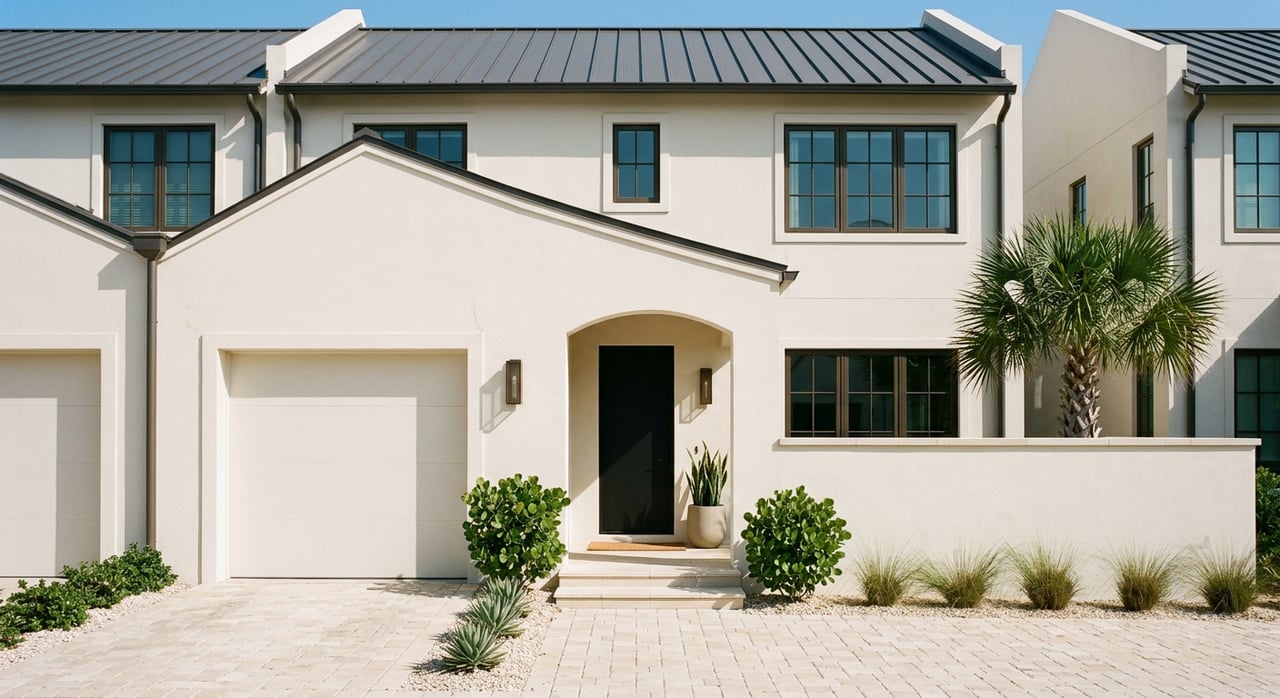
Indian Harbour Beach Townhomes & Villa Living Guide
March 24, 2026
March 24, 2026
Crave the beach lifestyle without the constant upkeep? In Indian Harbour Beach, townhomes and villas give you room to relax, lock the door, and go enjoy the coast. You get a short walk to the sand, community amenities, and less exterior maintenance, which is ideal if you are downsizing or planning seasonal stays. In this guide, you will learn how ownership works in Florida, what typical costs look like, what layouts and finishes to expect, and a practical checklist to buy with confidence. Let’s dive in.
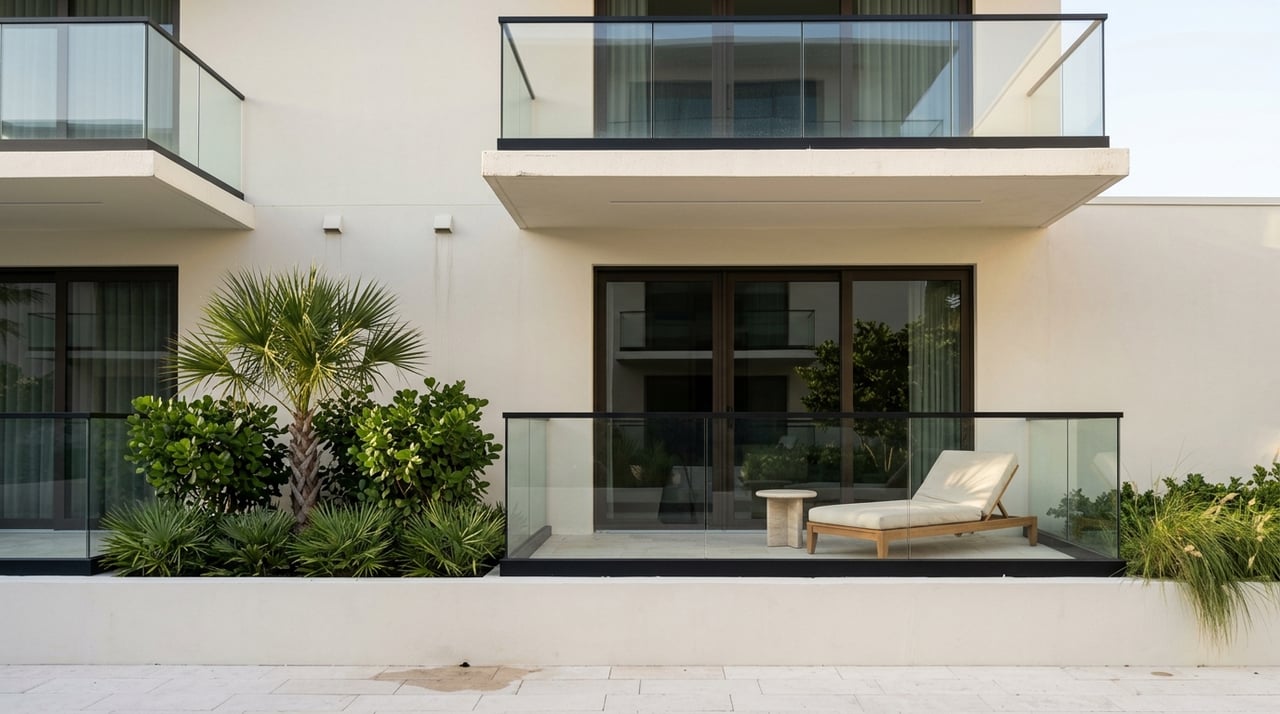
Imagine a quiet garden‑style townhome with a private patio and a simple stroll to the beach. Communities like Harbour Villas and Parkside Place focus on easy living and walkability, with smaller amenity sets that help keep monthly fees in check. On the other end of the spectrum, oceanfront buildings such as Ocean Walk typically offer private beach access, a heated pool and spa, fitness, tennis, a clubhouse, and secured parking, which drive higher association fees but deliver a resort feel.
If you value convenience, these homes make daily life simpler. Landscaping and exterior upkeep are usually handled by the association. Many units feature durable flooring and turnkey finishes aimed at lock‑and‑leave living, so you can spend more time on the beach and less time on chores.
“Townhome” and “villa” are often marketing terms. In Florida, the legal structure matters far more than the label. Your unit may be part of a condominium governed by Chapter 718 or it may be a fee‑simple townhome under a homeowners association governed by Chapter 720. That choice affects insurance, reserves, voting, and what records must be disclosed.
Always confirm the legal form before you write your offer. It determines what the association covers and what you must insure on your own.
Indian Harbour Beach sits in a stable beachside pocket where buyers value proximity to the Atlantic and a relaxed pace. Market trackers reported a median sold price around 403,000 in January 2026. Automated value estimates in early 2026 often ranged between the mid‑400s, while active listing medians can read higher than closed‑sale medians. Numbers vary by source and date, so use them as context rather than a hard target.
Examples that illustrate the spread by property type help set expectations:
What association fees commonly cover:
Services vary by community, so review each budget and inclusion list during due diligence.
If you will live here as your primary residence, Florida’s homestead exemption and Save‑Our‑Homes cap can materially reduce and stabilize your tax bill. The Brevard County Property Appraiser explains filing deadlines and assessment rules, including the March 1 filing date, on the BCPAO website.
Along the Space Coast, factor in hurricane wind coverage and a separate hurricane deductible that is often a percentage of the dwelling coverage amount, such as 2 percent, 5 percent, or 10 percent. Deductible structures and availability have shifted in recent years, so request the association’s current insurance declarations and get a quote from a local agent early. For background on flood coverage in condos, see the federal overview of RCBAP master flood policies. For broader Florida policy changes, many buyers find roundups like these helpful for context on deductibles and timelines; review a recent summary of policy updates for Florida homeowners, then confirm details with your insurer.
Oceanfront blocks in Indian Harbour Beach are typically mapped in FEMA’s high‑hazard categories, with VE and AE zones along the beach and AE zones near the Indian River in places. Ask for the property’s flood‑zone designation and any elevation certificate, and check the FEMA Flood Map Service Center for parcel‑level mapping at the FEMA Flood Map Service Center. County mitigation planning also highlights storm surge and sea‑level concerns for Brevard’s mid‑reach beaches; you can review a local planning document here: Brevard County Local Mitigation Strategy.
You will see a range of sizes:
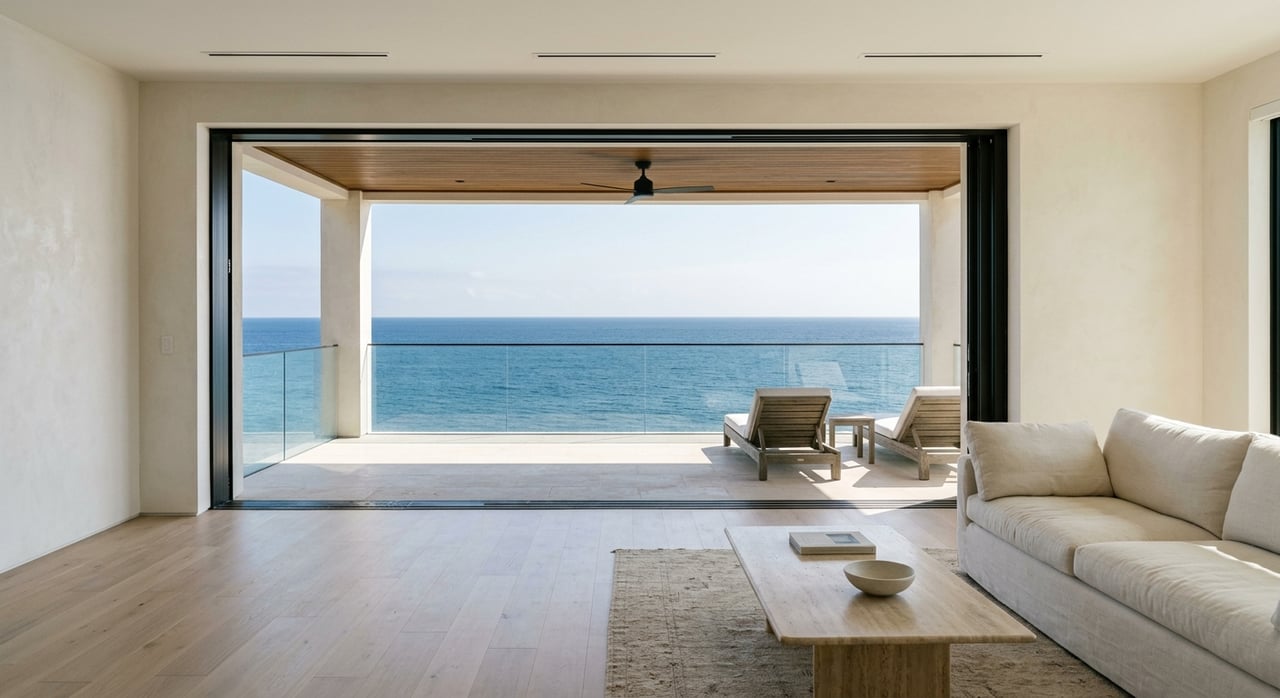
Many complexes were built between the late 1970s and the 1990s. Oceanfront towers often date to the 1970s and 1980s and have seen periodic building updates such as roof work, exterior concrete restoration, and impact door and window upgrades. Inside, expect tile or luxury vinyl plank on main floors, updated kitchens with granite or quartz, and stainless appliances in many renovations. Oceanfront units often feature balconies with sliding glass doors, sometimes retrofitted with impact glazing or shutters.
For condominiums and larger buildings, it is important to confirm milestone or recertification inspections and any structural integrity reserve studies that may apply under evolving Florida rules following the Surfside tragedy. For general context on those changes, see the Surfside condominium collapse overview, then verify the specific building’s current compliance and reports with the association and city.
Indian Harbour Beach prioritizes public access to the shoreline, and the city manages parking at beach access points. Non‑residents may encounter paid parking at city beaches, which is useful to know if you host guests. You can explore city programs and contacts at the City of Indian Harbour Beach website.
Amenity sets vary widely:
As a bonus, you are on Florida’s Space Coast. Many oceanfront balconies offer front‑row views of rocket launches, a lifestyle detail seasonal buyers love.
Use this checklist to compare communities and protect your budget:
If you are early in your search, choose two or three communities that fit your lifestyle and budget. Request association documents, get an insurance quote, check the flood zone, and line up inspections so you can move quickly when the right home appears. For questions on city programs, beach access, or building contacts, start with the City of Indian Harbour Beach.
When you are ready for a local, concierge‑level guide, reach out to Jamie Dandridge. You will get clear advice on neighborhoods, due diligence, and contract terms, plus a seamless process tailored to your timeline.
Stay up to date on the latest real estate trends.

Trust him for distinguished real estate service along Melbourne Beach’s coast. With his luxury-market expertise, local insight, and dedicated support, he ensures your buying or selling journey is seamless and successful.