Seawall vs Riprap in Florida’s Indian Harbour Beach
December 18, 2025
December 18, 2025
Shopping or selling on the water in Indian Harbour Beach and wondering if a seawall or riprap makes a difference? You are not alone. The shoreline in front of a home affects erosion control, boat access, maintenance, permits, and even the story your photos tell online. In this guide, you will learn how to tell a seawall from riprap at a glance, what each does in our local conditions, what upkeep to expect, and how to handle permits and disclosures with confidence. Let’s dive in.
Indian Harbour Beach sits on a barrier island with the Atlantic Ocean to the east and the Indian River Lagoon to the west. Oceanfront lots face powerful waves and storm surge. Lagoon-front homes usually deal with lower daily energy, wind-driven chop, and boat wakes.
That difference matters because the right shoreline solution depends on exposure. Oceanfront properties often need more robust engineering. Lagoon lots can sometimes use softer or hybrid options that protect property while respecting habitat in the Indian River Lagoon.
Florida regulates many shoreline structures and repairs. The Florida Department of Environmental Protection oversees coastal construction, activities near the beach and dunes, and work in state waters. Brevard County and the City of Indian Harbour Beach require local permits and code compliance. FEMA flood maps and local floodplain rules can also affect design and replacement.
Before you buy or sell, verify permits for any seawall or riprap on site, plus permits for past repairs. When in doubt, consult the City Building Department and Brevard County Environmental Permitting. For complex sites, bring in a licensed coastal engineer or a marine contractor who works in Brevard County.
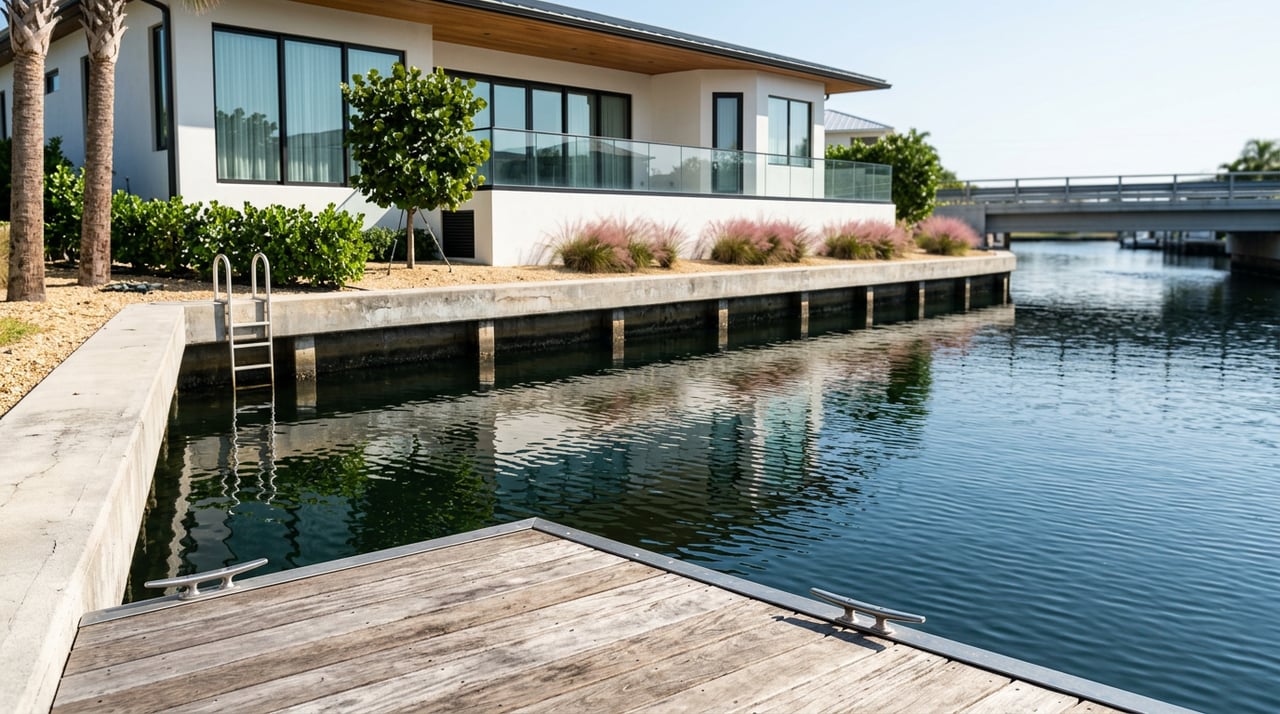
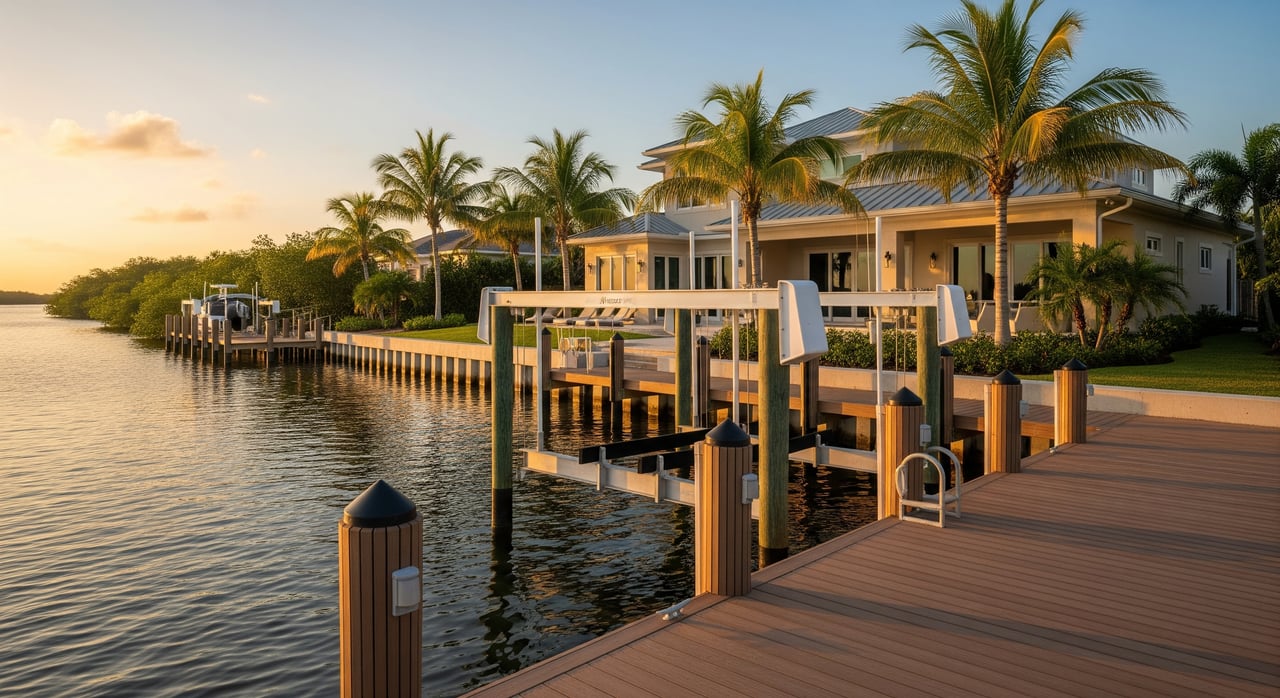
A seawall is a relatively vertical, engineered barrier at the water’s edge. It is often built from poured concrete, precast panels, steel sheet piles, or timber. Its job is to retain upland soils and form a firm, straight edge that resists wave runup.
You often see seawalls where land is at a premium or where a vertical edge makes dock placement simple. On narrow lots and urban shorelines, they help maximize usable yard area.
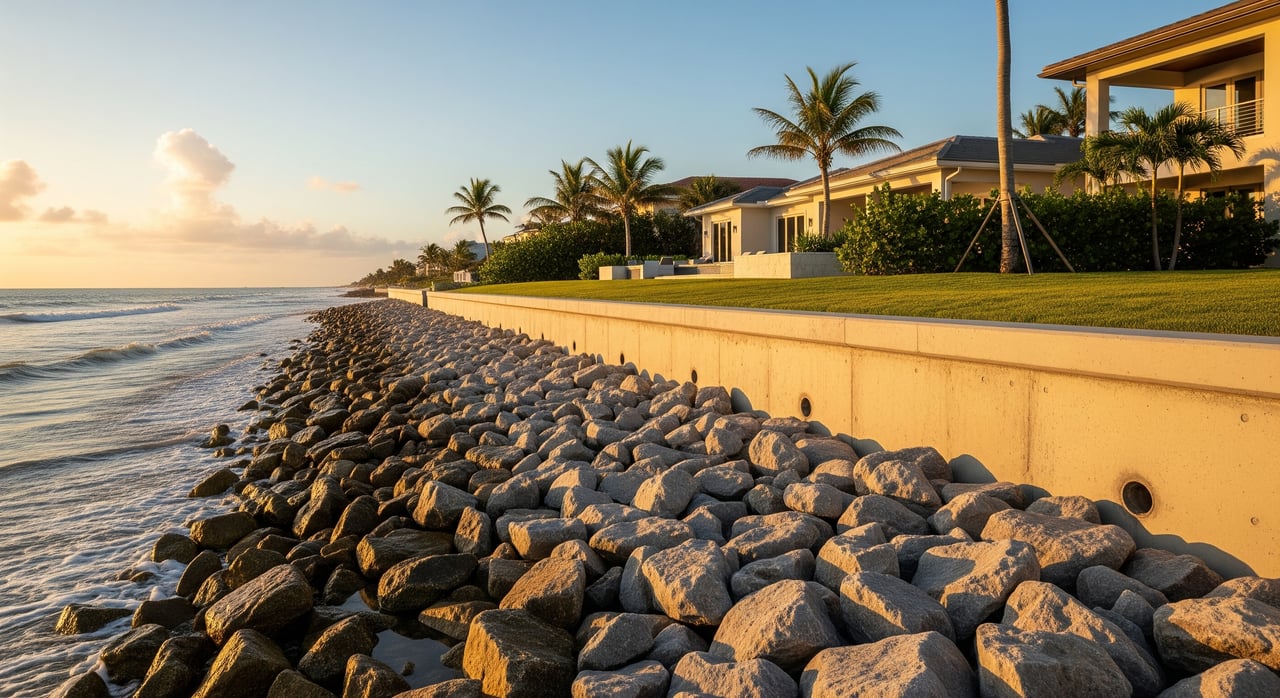
Riprap, also called a revetment, is a sloped layer of stone or boulders placed along the shoreline. The slope breaks up wave energy and protects the toe of a bank from scouring.
You typically see riprap on sloped banks or where a slightly softer look is preferred. With the right design and stone size, it can perform well for a long time, especially on lagoon shorelines with moderate energy.
Living shorelines use natural materials such as plantings, sand, and oyster elements. On low-energy sites, especially along the lagoon, they can be considered alone or paired with structures like toe rock. Many owners choose hybrid solutions that blend habitat value with structural stability.
Seawalls reflect wave energy. That helps protect the upland area, but it can increase turbulence and scour at the base if the design lacks proper toe protection. Riprap absorbs and dissipates wave energy, which can reduce local scour when the slope, stone size, and foundation are well engineered.
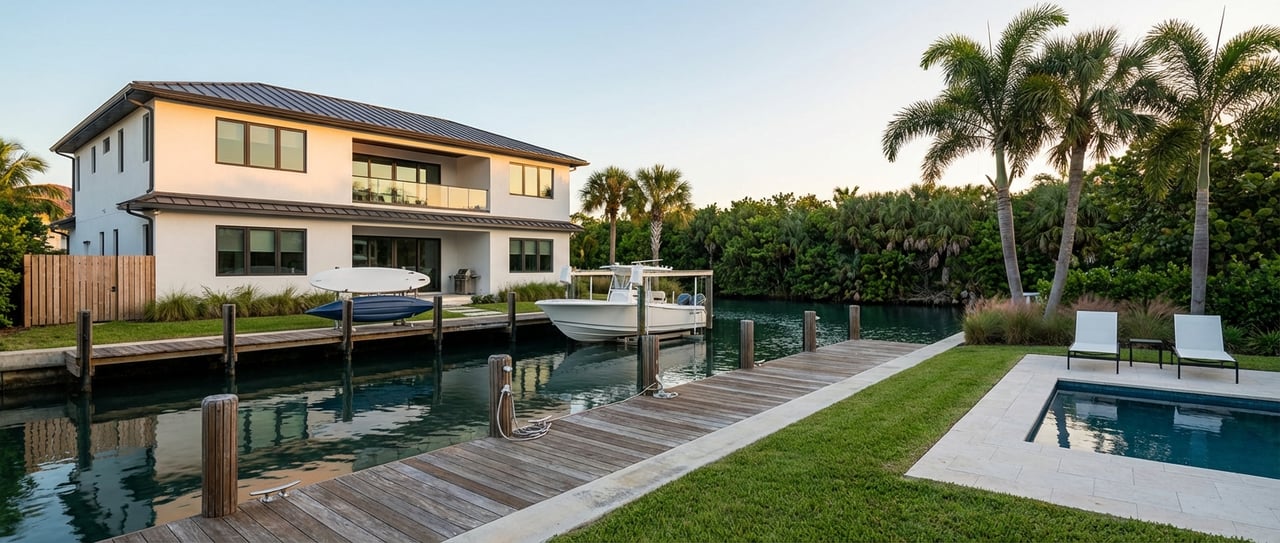
For boating, seawalls offer a sturdy, vertical edge that makes attaching fixed docks, lifts, and cleats simple. If water is shallow at the wall due to scour or sedimentation, docking can still be tricky. Vertical walls can also be abrasive to hulls if you berth against them.
Riprap can buffer wave energy near a dock, but the sloped rock edge is not ideal for stepping ashore and can damage hulls on contact. Docks on riprap often need extra structural interfaces and careful toe protection so the dock work does not undermine the rock.
Bottom line: Water depth at your shoreline, along with local shoaling and tidal patterns, often has more impact on dock function than the specific shoreline type.
Every site is different. Wave exposure, soil conditions, access, and design quality drive real outcomes. For budgets and timelines, seek multiple quotes from licensed marine contractors and ask for engineered options that match your location on the ocean or lagoon side.
If you notice movement, gaps, or exposed structural elements, call a licensed coastal engineer for a formal assessment.
Structural shoreline work usually requires permits from the state and local jurisdictions. The Atlantic side has additional beach and dune protections and Coastal Construction Control Line rules. On the lagoon, activities in state waters still require oversight.
Buyers should request copies of permits and any as-built drawings showing where the wall or rock sits relative to property lines and the mean high-water line. A current survey is valuable. Because submerged land rights can be complex, it is wise to confirm that no part of the structure encroaches beyond allowed boundaries.
Sellers should disclose known repairs, past failures, permit history, and any insurance claims related to storm damage. Flood insurance and FEMA flood maps can affect future repair requirements and insurability, so have those details ready.
On many lagoon-facing lots, a living shoreline or a hybrid design can balance stability with habitat value. Options include adding toe rock in front of a seawall, using a revetment with a concrete cap, or creating a living shoreline element seaward of existing armor. In the Indian River Lagoon, seagrass preservation and water quality are important, so designs that soften energy while protecting your upland can be a smart long-term choice.
To confirm local rules and documentation, contact the City of Indian Harbour Beach Building Department, Brevard County Environmental Permitting, and the Florida Department of Environmental Protection. For project feasibility and pricing, speak with a licensed coastal engineer and a licensed marine contractor who work regularly on Space Coast shorelines.
If you are planning to buy or sell, a solid paper trail and a clean shoreline inspection can shorten timelines and build buyer confidence. Keep records accessible, use clear photos in your listing, and be upfront about any known issues.
Ready to position your Indian Harbour Beach waterfront perfectly for the market or to identify the right shoreline for your lifestyle? Reach out to the local team that blends third-generation Space Coast expertise with world-class marketing. Connect with Jamie Dandridge to walk your shoreline, review permits, and craft a strategy. Request a Home Valuation to see how your waterfront structure factors into your price.
Stay up to date on the latest real estate trends.
Trust him for distinguished real estate service along Melbourne Beach’s coast. With his luxury-market expertise, local insight, and dedicated support, he ensures your buying or selling journey is seamless and successful.